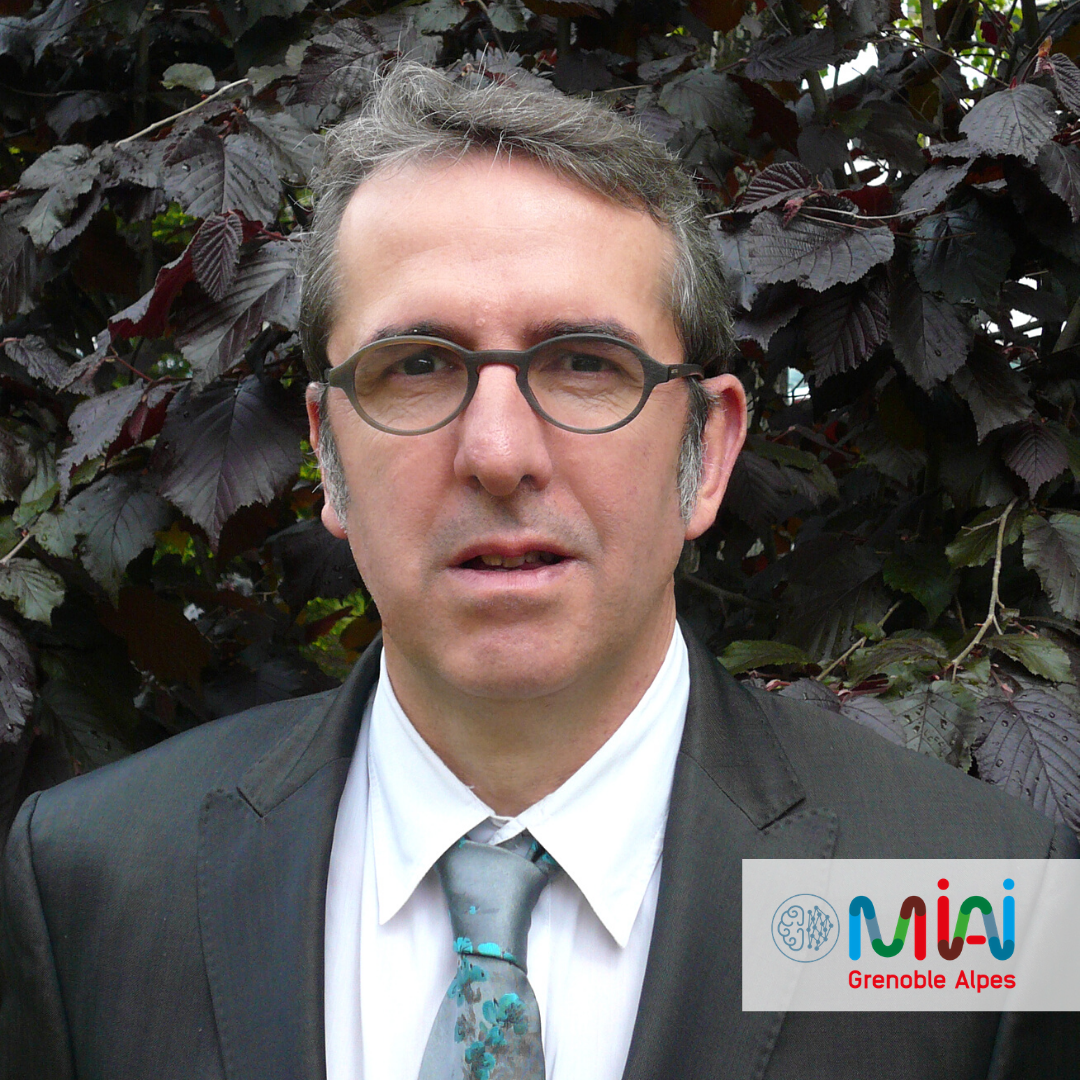
In short The goal ofMyWaytoHealthis to apply artificial intelligence to develop“trajectory-based medicine,” which will be pioneered by addressing obstructive sleep apnea (OSA), a condition that affects one billion people worldwide.
Scientific objectives and context
The innovation oftheMyWaytoHealth “trajectory-based medicine”chairis encapsulated in the concept of the disease trajectome. The trajectome encompasses the conditions, risk factors, and environmental and societal determinants that modulate disease trajectories within an individual patient’s ecosystem, requiring a new organizational framework for value-based care.
Researchdirections
Artificial intelligence atMyWaytoHealthis fundamental to providing unique insights for organizing the vast diversity of factors contributing to individual patient trajectories into a rational framework suitable for clinical decision-making, therapeutic interventions, and health system reform.
ACTIVITIES
The chair will develop artificial intelligence and integrative data analytics by combining routinely collected information with innovative data collection methods:
Structured and unstructured data captured by individual Digital Health Passports (through an industry partnership with home care providers, EIT Health POLLAR, and MARS electronic medical records);
International and national disease registries (120,000 patients in the French sleep apnea registry and the European Sleep Apnea Database (Principal Investigators); 50,000 patients monitored at home by Agiradom, with over 25,000 patients with sleep apnea evaluated; cardiovascular and sleep cohorts (G. Derumeaux, Paris);
Longitudinal data generated by innovative sensors (Dreem headband [longitudinal, large-scale at-home EEG], CPAP treatment devices [international industrial and academic partnerships: data on millions of OSA patients available from RESMED]; mandibular movements: SUNRISE and the University of Namur, Belgium);
National administrative healthcare databases covering medications, outpatient care, and inpatient care (MGEN private insurance); the ALASKA and COVISAS projects;
Socioeconomic, Attitudinal, and Behavioral Determinants (CDP LIFE Program (€1.7 million)).
CHAIR EVENTS
ISRAEL-FRANCE Webinar on Artificial Intelligence Applications During the COVID-19 Pandemic, November 23, 2020
Sleep During the COVID-19 Pandemic: Big Data and Artificial Intelligence to Improve Understanding and Ensure Continued Sleep Care
Swansea–Grenoble Workshop, virtual meeting, October 22, 2020
Al & Medicine
Keio University, Tokyo, February 6, 2020
Keynote Lecture: "Big Data Analysis and AI to Support Integrated Care for Sleep Apnea"
The 5th PKU-UPENN Sleep Medicine Forum & Xinyue Health International Sleep Forum, Beijing, November 16 & 17, 2019
"OSA Management: Insights Gained from Big Data Analyses and AI" (Keynote Speech)
SENSAPNEA EIT Health (Success Story)
RESEARCH TOPICS
Topic 1: Large-scale processing and interactive multidisciplinary exploration of patients’ trajectories
Informative representation of trajectories (visualization, dashboards) that enables the identification of clinically useful trajectories in large, high-dimensional datasets (in partnership with Probayes, an AI SME and subsidiary of “La Poste,” and SEMEIA, an AI SME focused on national claims data and predictive medicine)
Identify subtle and complex associations between diseases and environmental factors that cannot be detected using traditional analytical approaches: Compare trajectories to understand differences and contextualize decisions
Hypothesis generation for subsequent validation in clinical trials and real-world healthcare settings
Topic 2: Prediction of Health Progression and Aggregation of Comorbidities
Deep learning techniques to predict health outcomes and the impact of treatments at the population level (cohorts and real-world data) and at the individual level
Topic 3: Patient-centered and integrated care, health system reform, and cost-effectiveness evaluations
AI for Improving Sleep Apnea Diagnosis Pathways: SENSAPNEA EIT Health (Success Story), Reimbursement for a New Diagnosis Pathway in France (4M for a Nationwide Validation Study)
Validation of New Payment Models Using Deep Learning Applied to Administrative Databases
Transfer learning to generate multilingual textual narratives for different levels of expertise (medical professionals, patients, etc.)
Published on October 14, 2026 Updated on October 14, 2026
Chairperson
Jean-Louis Pépin,Professor of Clinical Physiology at the University of Grenoble-Alpes (UGA)
Vice Dean of the Grenoble School of Medicine in charge of research; Director of the HP2 Laboratory (Inserm U1042; Hypoxia Pathophysiology)
jean-louis.pepin@univ-grenoble-alpes.fr
Share the linkCopyCopiedClose the modal windowShare the URL of this pageI recommend this page:Available at this address:The page will then be accessible from your "My Favorites" menu.Stop the videoPlay the videoMutePlay audioChat: Have a question?Robo Fabrica ChatbotMatomo Traffic StatisticsX (formerly Twitter)