Sleep Health-AI: The Future of Sleep Health: A Data-Driven and Artificial Intelligence Revolution in Sleep Science and Medicine
Prof. Jean-Louis Pépin
Professor of Clinical Physiology at the University of Grenoble Alpes, Director of the HP2 Laboratory (INSERM Unit 1300) JPepin@chu-grenoble.fr Website LinkedIn
DESCRIPTION
Rationale and Context
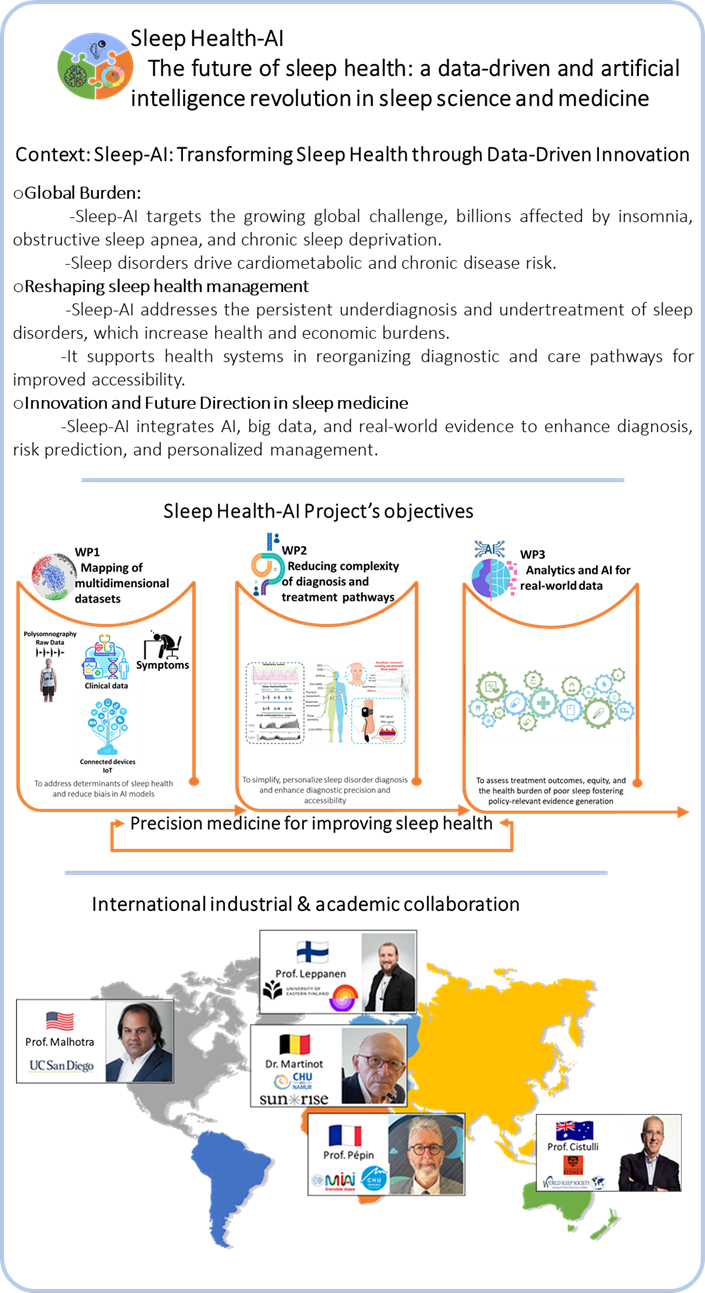
The Sleep Health-AI international research chair aims to transform sleep medicine by harnessing artificial intelligence (AI) and real-world data analytics to make sleep health assessment and care more accessible, accurate, and effective. Sleep, along with diet and physical activity, is a fundamental determinant of human health. Yet, billions of people worldwide suffer from unrecognized or inadequately treated sleep disorders such as insomnia and obstructive sleep apnea (OSA), which contribute to significant cardiometabolic, cognitive, and societal burdens. Addressing this challenge requires reimagined diagnostic strategies and innovative care pathways supported by digital technologies.
Sleep Health-AI brings together a global network of leading clinicians, engineers, and data scientists to develop AI-based methods that integrate large-scale clinical, physiological, and behavioral datasets. Anchored at Université Grenoble Alpes (UGA) and supported by international academic and industrial partners, the chair leverages electronic health records, claims data, wearable sensor outputs, and patient-reported outcomes to accelerate progress in precision sleep medicine.
The project’s activities are organized around three complementary objectives:
- Mapping and harmonizing multidimensional datasets across the international consortium;
- Simplifying diagnostic pathways through innovative connected sensors and automated AI-driven analysis;
- Producing real-world evidence to evaluate treatment effectiveness and inform health system transformation.
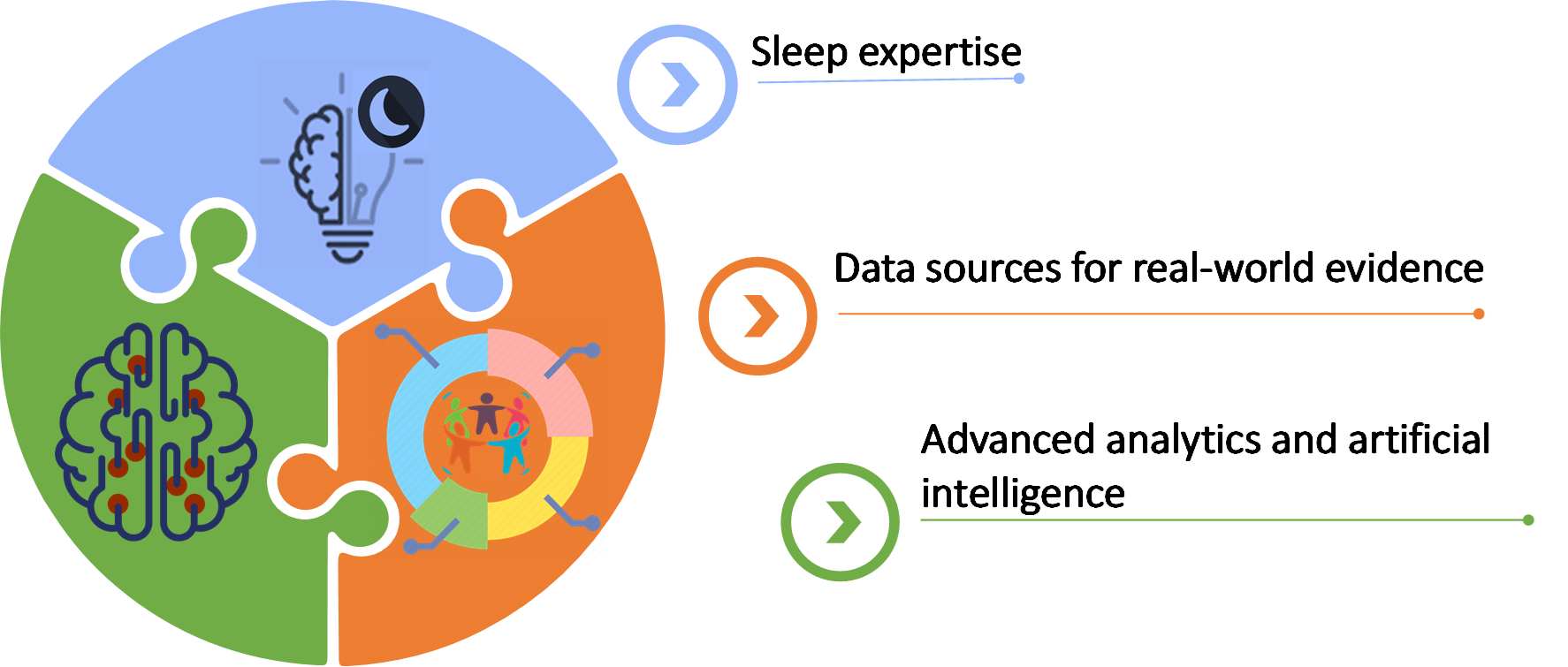
Its multidisciplinary approach, combining clinical physiology, signal processing, data science, and biostatistics, ensures that AI developments remain physiologically grounded and clinically interpretable. A strong emphasis on transparency, reproducibility, and open access fosters trust in the generated algorithms and encourages their adoption by healthcare professionals.
Through its academic–industrial partnerships, Sleep Health-AI aims to establish a sustainable model for responsible digital innovation in sleep healthcare. By integrating AI into the prevention, diagnosis, and management of sleep disorders, the chair aspires to make sleep health a cornerstone of predictive, preventive, and personalized medicine worldwide.
ACTIVITIES
The department develops and validates end-to-end digital solutions for the diagnosis and management of sleep disorders.
Major achievements include:
"Sunrise" Innovation Project (J.L. Pépin, Principal Investigator): a national reimbursement initiative for an AI-based mandibular sensor enabling at-home diagnosis of sleep apnea; 880 patients enrolled across 18 French centers; FDA-cleared (U.S., 2023) and NICE-recommended (U.K., 2024).
H2020 Sleep Revolution project: Development of deep learning models for sleep quality metrics using wearable sensors and cloud platforms.
ALASKA, MONTANA, and COVISAS National Health Data Projects (SNDS): Real-world evidence on CPAP effectiveness and COVID-19 risk in 17 million individuals.
Project Electrum (U.S. claims data): demonstrated health and cost benefits of CPAP adherence in patients with comorbid sleep apnea.
The team is also a pioneer in variability-in-health analytics, exploring night-to-night variability in sleep apnea severity as a novel predictive marker.
Recruitment opportunities include postdoctoral fellows and engineers in various fields related to sleep health and AI:
EVENTS
Participation in the European Sleep Research Society and the World Sleep Congress (2025).
Organization of symposia on real-world evidence and digital sleep medicine at ERS/ESRS meetings
The Role of Artificial Intelligence (AI) in the Future of Sleep Medicine:
The use of new technologies and single-channel devices is beneficial for the diagnosis of suspected sleep apnea as data sets:
How to Characterize and Address Variability in OSA Across Various Datasets:
Sleep Revolution meeting (H2020) and symposia at various conferences:
International conferences on sleep:
CHAIR PRESENTATION
License: Unless otherwise stated, all documents are shared under the Creative Commons BY-NC-ND 4.0 license. You may view and share them for non-commercial purposes, without modification, and with appropriate credit to the authors.
SELECTED LIST OF PUBLICATIONS
2023
Duval J, Mouroux C, Foury S, Pépin JL, Bailly S. Patient motivation as assessed by caregivers at the start of continuous positive airway pressure therapy is predictive of adherence and the 1-year therapy discontinuation rate. Sleep Breath. 2023. doi:10.1007/s11325-023-02965-3
Pépin JL, Tamisier R, Baillieul S, Ben Messaoud R, Foote A, Bailly S, et al. Creating an Optimal Approach for Diagnosing Sleep Apnea. Sleep Med Clin. 2023;18:301–9. doi:10.1016/j.jsmc.2023.05.004
Mendelson M, Duval J, Bettega F, Tamisier R, Baillieul S, Bailly S, Pépin JL. The individual and societal costs of nonadherence to continuous positive airway pressure, contributing factors, and strategies for improvement. Expert Rev Respir Med. 2023;17:305–17. doi:10.1080/17476348.2023.2202853
Pépin JL, Lemeille P, Denis H, Josseran A, Lavergne F, Panes A, et al. Health trajectories before initiation of non-invasive ventilation for chronic obstructive pulmonary disease: a French nationwide database analysis. Lancet Reg Health Eur. 2023;34:100717. doi:10.1016/j.lanepe.2023.100717
Arzt M, Munt O, Pépin JL, Heinzer R, Kubeck R, von Hehn U, et al. Registry on the Treatment of Central and Complex Sleep-Disordered Breathing with Adaptive Servo-Ventilation (READ-ASV): protocol and cohort profile. ERJ Open Res. 2023;9:00618–2022. doi:10.1183/23120541.00618-2022
Gentina T, Gentina E, Douay B, Micoulaud-Franchi JA, Pépin JL, Bailly S. Investigating associations between social determinants, self-efficacy, and CPAP adherence in sleep apnea: the SEMSA study. Front Neurol. 2023;1148700. doi:10.3389/fneur.2023.1148700
Galerneau LM, Bailly S, Terzi N, Ruckly S, Garrouste-Orgeas M, Cohen Y, et al. Management of Acute Exacerbations of Chronic Obstructive Pulmonary Disease in the ICU: An Observational Study From the OUTCOMEREA Database, 1997–2018. Crit Care Med. 2023;51:753–64. doi:10.1097/CCM.0000000000005807
Bottaz-Bosson G, Midelet A, Mendelson M, Borel JC, Martinot JB, Le Hy R, et al. Remote monitoring of positive airway pressure data: Challenges, pitfalls, and strategies to consider for optimal data science applications. Chest. 2023;163:P1279–1291. doi:10.1016/j.chest.2022.11.034
Bocoum AM, Bailly S, Joyeux-Faure M, Baillieul S, Arbib F, Kang CL, et al. Long-term outcomes of sleep apnea patients treated with CPAP: Impact of blood pressure responses after CPAP initiation and of treatment adherence. Sleep Med. 2023;109:25–31. doi:10.1016/j.sleep.2023.06.022
Malhotra A, Cole K, Malik A, Pépin JL, Sert Kuniyoshi F, Cistulli P, et al. Positive Airway Pressure Adherence and Health Care Resource Utilization in Patients With Obstructive Sleep Apnea and Heart Failure With Reduced Ejection Fraction. J Am Heart Assoc. 2023;12. doi:10.1161/JAHA.122.028732
Turnbull C, Bailly S. For One Night Only—Are Single-Night Studies Sufficient to Predict the Risk of Hypertension in OSA? Chest. 2023;164:15–7. doi:10.1016/j.chest.2023.03.036
Martinot JB, Le-Dong NN, Malhotra A, Pépin JL. Respiratory effort during sleep and prevalent hypertension in obstructive sleep apnea. Eur Respir J. 2023.
Martinot JB, Le-Dong N, Borel A, Tamisier R, Malhotra A, Pépin J. Respiratory effort during sleep and the prevalence of type 2 diabetes in obstructive sleep apnea. Diabetes Obes Metab. 2023;25:2815–23. doi:10.1111/dom.15169
Martinot JB, Le-Dong NN, Tamisier R, Bailly S, Pépin JL. Determinants of apnea-hypopnea index variability during home sleep testing. Sleep Med. 2023;111:86–93. doi:10.1016/j.sleep.2023.09.002
Zou D, Grote L, Basoglu O, Verbraecken J, Schiza S, Sliwinski P, et al. Arterial bicarbonate is associated with hypoxic burden and uncontrolled hypertension in obstructive sleep apnea—The ESADA cohort. Sleep Med. 2023;102:39–45. doi:10.1016/j.sleep.2022.11.041
Laharnar N, Bailly S, Basoglu O, Buskova J, Drummond M, Fanfulla F, et al. Bed partner perception of CPAP therapy on relationship satisfaction and intimacy—A European perspective from the ESADA network. J Sleep Res. 2023;e14125. doi:10.1111/jsr.14125
2024
Bailly S, Foote A, Mendelson M, Rakotovao A, Borel JC, Pépin JL, Tamisier R, Revil H. Sociological determinants of adherence to continuous positive airway pressure in the management of sleep apnea syndrome: protocol for a transdisciplinary, prospective observational study. BMJ Open. 2024. doi:10.1136/bmjopen-2023-079765
Pires GN, Arnardottir E, Bailly S, McNicholas W. Guidelines for the development, performance evaluation, and validation of new sleep technologies (DEVSleepTech guidelines) – a protocol for a Delphi consensus study. J Sleep Res. 2024. doi:10.1111/jsr.14163
Coelho J, Bailly S, Baillieul S, Sagaspe P, McNicholas W, Taillard J, et al. Predictors of driving risk in patients with obstructive sleep apnea syndrome treated with continuous positive airway pressure: a French multicenter prospective cohort. Sleep. 2024. doi:10.1093/sleep/zsae211
Bailly S, Mendelson M, Baillieul S, Tamisier R, Pépin JL. The Future of Telemedicine for the Treatment of Obstructive Sleep Apnea: A Narrative Review. J Clin Med. 2024;13:2700. doi:10.3390/jcm13092700
Sabil A, Borel JC, Texereau J, Bailly S, Pépin JL. Continuous positive airway pressure treatment for obstructive sleep apnea, hospitalizations, and related costs in the French National Healthcare Insurance database. Respir Med Res. 2024;86:101098. doi:10.1016/j.resmer.2024.101098
Pépin JL, Cistulli P, Crespeigne E, Tamisier R, Bailly S, Bruwier A, et al. Automated Analysis of Mandibular Movement for Monitoring Oral Appliances in Obstructive Sleep Apnea: A Prospective Cohort Study. Ann Am Thorac Soc. 2024;21:814–22. doi:10.1513/AnnalsATS.202312-1077OC
Ben Messaoud R, Baillieul S, Tamisier R, Terrail R, Bailly S, Joyeux-Faure M, Pépin JL. Digital sleep clinic: assessing the efficacy of continuous positive airway pressure through sleep staging using connected devices: a study protocol. BMC Digital Health. 2024;2:23. doi:10.1186/s44247-024-00077-w
Briançon-Marjollet A, Joyeux-Faure M, Ben Messaoud R, Bailly S, Ngo V, Colombet S, et al. Long-term incidence of severe outcomes in a prospective cohort of non-obese patients with obstructive sleep apnea who had no comorbidities at enrollment. ERJ Open Res. 2024;10:00930–2023.
Lefouili M, Arnol N, Journet S, Chaudron P, Adler D, Janssens JP, Pépin JL, Bailly S, Borel JC. Factors Associated With Changes in the S3-NIV Score Over Time in People With Chronic Respiratory Failure Treated With Long-Term Home Noninvasive Ventilation. Arch Bronconeumol. 2024;463–9.
Gaucher J, Montellier E, Vial G, Chuffart F, Guellerin M, Bouyon S, et al. Long-term intermittent hypoxia in mice induces inflammatory pathways implicated in sleep apnea and steatohepatitis in humans. iScience. 2024;27:108837. doi:10.1016/j.isci.2024.108837
Ebrahimian S, Sillanmaki S, Hietakoste S, Kulkas A, Toyras J, Bailon R, et al. Beat-to-beat cardiac repolarization lability increases during hypoxemia and arousals in patients with obstructive sleep apnea. Heart Circ Physiol. 2024. doi:10.1152/ajpheart.00760.2023
Texereau J, Bailly S, Borel JC, Sabil A, Pépin JL. National Implementation of CPAP Telemonitoring and a Pay-for-Performance Scheme for Home Care Providers in France Leads to Prioritization of Resources for Individuals with Low Therapy Adherence: The IMPACT-PAP Cohort Study. Arch Bronconeumol. 2024;Online ahead of print.
Pataka A, Pépin JL, Bonsignore MR, Schiza S, Saaresranta T, Bouloukaki I, et al. Sleep apnea phenotypes in women: A cluster analysis from the ESADA cohort. Sleep Med. 2024;124:494–501. doi:10.1016/j.sleep.2024.10.015
Seguin L, Mendelson M, Doutreleau S, Clin R, Destors M, Albaladejo P, et al. Temporal link between cardiac arrhythmias and postoperative episodes of hypoxemia during nocturnal sleep in patients with obstructive sleep apnea syndrome. Sleep Med. 2024;124:260–7.
El Bayan A, Fournier J, Minoves M, Baillieul S, Roche F, Pereck N, et al. Cerebral oxidative stress, inflammation, and apoptosis induced by intermittent hypoxia: a systematic review and meta-analysis of rodent data. Eur Respir Rev. 2024;33:240162.
Tondo P, Scioscia G, Bailly S, Sabato R, Campanino T, Soccio P, et al. Exploring phenotypes to improve long-term mortality risk stratification in obstructive sleep apnea through a machine learning approach: an observational cohort study. Eur J Intern Med. 2024.
2025
Tondo P, Scioscia G, Bailly S, Sabato R, Campanino T, Soccio P, Foschino Barbaro MP, Gallo C, Pépin JL, Lacedonia D. Exploring phenotypes to improve long-term mortality risk stratification in obstructive sleep apnea through a machine learning approach: an observational cohort study. Eur J Intern Med. 2025;133:64–70. doi:10.1016/j.ejim.2024.12.015
Pépin JL, Herquelot E, Denis H, Josseran A, Lavergne F, Benjafield A, et al. Impact of long-term noninvasive ventilation on severe exacerbations and survival in COPD: a French nationwide cohort study using multistate models. Thorax. 2025;80:616–23. doi:10.1136/thorax-2024-222392
Benjafield AV, Sert Kuniyoshi F, Malhotra A, Martin JL, Morin CM, Maurer LF, et al. Estimation of the global prevalence and burden of insomnia: a systematic literature review-based analysis. Sleep Med Rev. 2025;82:102121. doi:10.1016/j.smrv.2025.102121
Lechat B, Manners J, Pinilla L, Reynolds AC, Scott H, Vena D, et al. Global warming may increase the burden of obstructive sleep apnea. Nat Commun. 2025;16:5100. doi:10.1038/s41467-025-60218-1
Boers E, Barrett MA, Benjafield AV, Barnet JH, Ravelo LA, Kaye L, et al. Projecting the 30-year burden of obstructive sleep apnea in the United States: a prospective modeling study. Lancet Respir Med. 2025;in press. doi:10.1016/S2213-2600(25)00243-7
Martinot JB, Le-Dong NN, Cassibba J, Clause D, Pépin JL, Gozal D. Interpreting the mandibular movement signal in the diagnosis of pediatric obstructive sleep apnea: A technical and practical review. Sleep Med Rev. 2025;in press. doi: 10.1016/j.smrv.2025.102159
Cole KV, Malick AS, Cistulli PA, Sterling KL, Malhotra A, Alpert N, Pépin JL, on behalf of the medXcloud group. Positive Airway Pressure (PAP) Therapy Use and Healthcare Resource Utilization in Patients with Obstructive Sleep Apnea and Comorbid Insomnia (COMISA). Chest. 2025;in press. doi:10.1016/j.chest.2025.08.044
Figard C, Ben Messaoud R, Baillieul S, Joyeux-Faure M, Destors M, Tamisier R, Khouri C, Pépin JL. Effect of sleep apnea interventions on multiple health outcomes: an umbrella review of meta-analyses of randomized controlled trials. eClinicalMedicine. 2025;89:103529. doi:10.1016/j.eclinm.2025.103529
Tankere P, Razakamanantsoa L, Khouri C, Patout M, Stauffer E, Baillieul S, et al. Impact of positive airway pressure for chronic hypercapnic respiratory failure on sleep quality: a systematic review and meta-analysis. Eur Respir Rev. 2025;34:250090. doi:10.1183/16000617.0090-2025
Coiffier O, Jandric I, Causse C, Pépin JL, Mendelson M, Bailly S. An overview of longitudinal data analyses in sleep research. Sleep Med. 2025;accepted. doi:10.1016/j.sleep.2025.106871
Borel AL, Van Ngo TH, Coumes S, Pépin JL, Abba J, Tamisier R, Tonetti G, Suzeau P, Reche F, Bailly S. Cluster analysis in individuals with obesity and its association with bariatric surgery outcomes: The Severe Obesity Outcome Network cohort. Clin Nutr. 2025;54:210–9. doi:10.1016/j.clnu.2025.09.022
Published on October 13, 2026 Updated on October 13, 2026
Core members
Jean-Louis Pépin (UGA, France)
International members
Dr. Jean-Benoit Martinot / Nhat-Nam Le-Dong (Belgium)
Prof. Peter Cistulli, University of Sydney (Australia)
Prof. Atul Malhotra, University of California, San Diego (USA)
Associate Professor Timo Leppänen, University of Eastern Finland (Finland)
Research Topics
Artificial intelligence in sleep health; Digital sleep diagnosis; Real-world evidence; Clinical data science; Machine learning and deep learning; Wearable sensors and connected health; Precision sleep medicine; Health data analytics; Interpretable AI for healthcare.
Share the linkCopyCopiedClose the modal windowShare the URL of this pageI recommend this page:Available at this address:The page will then be accessible from your "My Favorites" menu.Stop the videoPlay the videoMutePlay audioChat: Have a question?Robo Fabrica ChatbotMatomo Traffic StatisticsX (formerly Twitter)